Why CBAM Changes the Conversation
CBAM was designed to stop carbon leakage—companies moving production to regions with looser environmental rules to avoid EU costs. Importers now have to declare the embedded carbon in certain goods. Fasteners themselves aren't always the direct target, but they're made from materials that are. Steel wire comes from mills that fall under CBAM scope. That means fastener suppliers need to know where their material comes from and how it was produced.
For European procurement teams, this introduces new risk. If upstream carbon costs aren't documented, or if paperwork is incomplete, projects face compliance delays. Suddenly, "who made the steel" matters as much as "how much does the screw cost."
What Changes When You Look Past the Price Tag
Carbon steel screws aren't going away. They're strong, cheap, and everywhere. But if you evaluate them across a 25-year project lifecycle, a few things stand out:
-
Corrosion resistance depends entirely on coatings. Scratch that coating during installation—which happens constantly—and rust starts.
-
When fasteners fail, replacement isn't just a screw. It's labor, equipment, downtime, and often damage to surrounding materials.
-
Every replacement cycle adds more production, more transport, more carbon to the project's total footprint.
The screw that costs less upfront can end up costing more over time. That math is starting to land differently under CBAM thinking.
What Buyers Actually Ask Now
Walk through any European project discussion today and you'll hear different questions than five years ago:
-
"How does this fastener perform in coastal exposure without maintenance?"
-
"Can it drill through high-strength steel without pre-drilling?"
-
"What's the expected service life in this specific environment?"
-
"Do you have test data for corrosion and fatigue?"
These aren't questions about unit price. They're questions about long-term reliability. And they reflect a shift from purchasing components to engineering connections.
Where Bimetal Fits Into This Picture
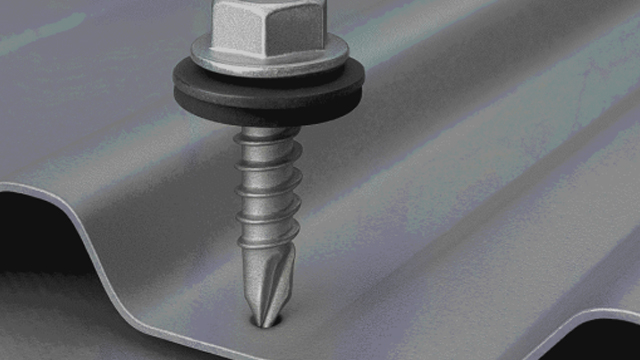
Bimetal screws show up more in these conversations now. The reason is straightforward: they solve the trade-off that carbon steel and stainless can't.
A hardened carbon steel tip drills fast and clean through structural steel. No heat buildup, no seized screws, no snapped tips.
A stainless steel body resists corrosion where it matters—on exposed surfaces—without relying on coatings that can wear.
Instead of picking between drilling performance and long-term durability, you get both. For solar arrays, metal roofs, coastal infrastructure—places where replacement is expensive and failure is visible—that combination matters.

What This Means for Suppliers
The shift isn't about carbon steel disappearing. It's about buyers becoming more selective. Projects that need 25-year reliability will look for solutions engineered for that lifespan. Projects with shorter horizons or less exposure will still use standard materials.
For suppliers, the implication is clear: documentation matters. Material certificates, test reports, traceable batches—these aren't just paperwork. They're evidence that a fastener will perform as claimed. European buyers increasingly want to see that evidence before they commit.
Bottom Line
CBAM didn't set out to change how buyers choose screws. But by putting the spotlight on material origin and lifecycle impact, it's shifting procurement logic. The cheapest screw is no longer the automatic choice. The screw that installs cleanly, lasts decades, and never shows up on a maintenance report is starting to look like the better investment. For European projects built to last, that's the direction the market is moving.