
Triangular self-tapping screw is also called triangular self-tapping locking screw or triangular self-locking screw. It means that the cross section of the threaded part of the self-tapping screw is triangular, and other parameters are the same as those of the mechanical screw. It belongs to a kind of self-tapping screw.
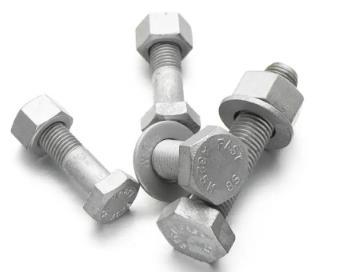
Compared with ordinary mechanical screws, triangular self-tapping screws can reduce the resistance in the process of locking. It taps the workpiece by three points, and there will be a thermal effect in the locking process, which will prevent the screw from loosening after cooling.
Triangle self-tapping screw has many advantages in practical application.
The first advantage is that you can attack yourself. Faced with the hardness of some customers' products, such as iron plates, the three-tooth angle screw just uses its self-tapping property to better penetrate into the products. For other castings that need to be fastened with more screws, such as the cavity of radio frequency filter, triangular teeth screws can be used to fix them quickly.
The second advantage is that compared with using mechanical screws, nuts can be saved or threads can be pre-drilled on the locked parts. It doesn't need to be equipped with a nut like a mechanical screw. The cost of customers is greatly saved, and the fixed efficiency is greatly improved.
The third advantage is that triangular teeth make use of the characteristics of small contact surface, small locking torque and the principle of the reaction force generated by the plastic deformation of the locked piece in the locking process to generate a larger preset torque, which can prevent the screw from loosening.
Because of the above advantages, triangular self-tapping screws are widely used. However, if the screws slip due to improper use, it is often a headache for customers. Because the value of general locked parts is usually higher than that of screws. For example, the value of the cavity of a radio frequency filter is usually thousands to tens of thousands of times that of a screw. If the cavity is scrapped due to screw slippage, the customer is often unacceptable. At the same time, screw slippage can also cause very serious accidents such as production line stoppage of customers.
The sliding of triangular self-tapping screws is mainly due to relatively high fixing torque. However, the reasons for the over-height may be that the screw tooth diameter is too small, the mounting hole is too large, the actual installation exceeds the set torque (such as the voltage or air pressure fluctuates greatly) or the torque specified in the original design is too high. After the screw slips, it will still slip if another screw of the same specification is used to screw it. If the screw slips during the first screwing, the self-tapping screw itself has some cutting functions, which will cause the threaded hole to be enlarged and unable to be locked.
After the self-tapping screw slips, one way is to repair the slipped hole with thread sheath. However, the disadvantage of this method is that the process is complicated and the cost is high. The specification of the screw used after repair will also change, and the appearance will be obviously different from that of the original screw.
At present, the fastest, most effective and cost-saving method is to directly lock in the slipping hole by using the mechanical screws with the same material, same surface treatment and same specifications after slipping, which can effectively lock in the slipping threaded hole.
Because the mechanical screw has a much larger contact surface with the threaded hole than the triangular self-tapping screw, it can bear higher fixing torque without reducing the fixing torque originally required by customers. .
After many years of practical application, this method has a very good effect, and this kind of slipping problem has been satisfactorily solved. Customers are very satisfied with our solution.
Post time: Dec-15-2022


